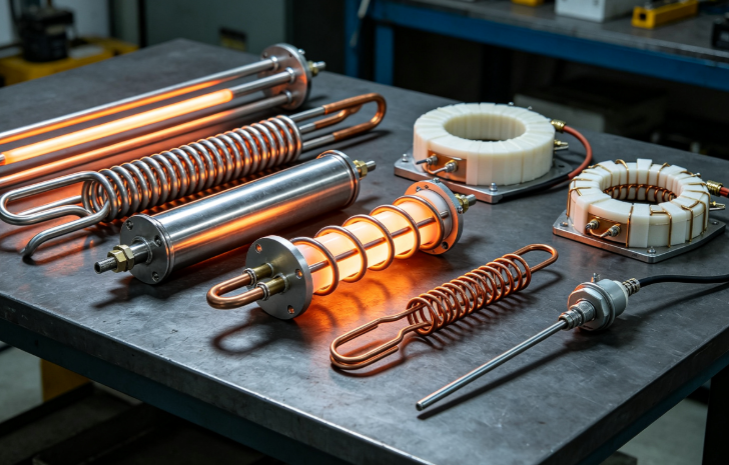
<h2><span style="color: rgb(15, 17, 21); font-size: 16.5pt;"><strong>Table of Contents</strong></span></h2><ol><li><p><span style="color: rgb(15, 17, 21); font-size: 12pt;">Introduction: The Fundamental Role of Electric Heating Parts</span></p></li><li><p><span style="color: rgb(15, 17, 21); font-size: 12pt;">Types of Custom Electric Heating Parts</span></p></li><li><p><span style="color: rgb(15, 17, 21); font-size: 12pt;">Key Materials and Their Applications</span></p></li><li><p><span style="color: rgb(15, 17, 21); font-size: 12pt;">Precision Manufacturing Processes</span></p></li><li><p><span style="color: rgb(15, 17, 21); font-size: 12pt;">Why Customization Matters in Heating Applications</span></p></li><li><p><span style="color: rgb(15, 17, 21); font-size: 12pt;">Quality Control and Safety Certification</span></p></li><li><p><span style="color: rgb(15, 17, 21); font-size: 12pt;">FAQ</span></p></li></ol><p></p><hr><p></p><h2><span style="color: rgb(15, 17, 21); font-size: 16.5pt;"><strong>1. Introduction: The Fundamental Role of Electric Heating Parts</strong></span></h2><p><span style="color: rgb(15, 17, 21); font-size: 12pt;">Electric heating parts are essential components in virtually every device that generates heat—from industrial ovens and packaging machinery to household water heaters and kitchen appliances. These parts convert electrical energy into thermal energy through resistance heating, providing reliable and controlled heat for countless applications. Unlike standard mechanical components, heating parts must maintain consistent performance under sustained high temperatures, making material selection and manufacturing precision paramount to their functionality and longevity.</span></p><p><span style="color: rgb(15, 17, 21); font-size: 12pt;">The market for electric heating parts continues to expand, driven by growth in industrial processing, the increasing electrification of household appliances, and the rising demand for energy-efficient heating solutions. In industrial settings, heating elements are critical for processes such as plastic molding, food processing, chemical reactions, and surface treatment. In households, they are found in water heaters, ovens, coffee makers, irons, and space heaters. The diversity of these applications demands custom solutions rather than one-size-fits-all parts.</span></p><p></p><hr><p></p><h2><span style="color: rgb(15, 17, 21); font-size: 16.5pt;"><strong>2. Types of Custom Electric Heating Parts</strong></span></h2><p><span style="color: rgb(15, 17, 21); font-size: 12pt;">Electric heating parts come in a variety of configurations, each suited to different operating conditions and installation requirements. The most common types include:</span></p><h3><span style="color: rgb(15, 17, 21); font-size: 15pt;"><strong>2.1 Tubular Heating Elements</strong></span></h3><p><span style="color: rgb(15, 17, 21); font-size: 12pt;">Tubular heating elements are among the most widely used electric heating parts. They consist of a resistance wire (typically nickel-chromium alloy) coiled inside a metal sheath, with magnesium oxide powder insulating the wire from the sheath. This design allows the element to be bent into custom shapes to fit specific applications, making it highly adaptable for both industrial and household appliances.</span></p><h3><span style="color: rgb(15, 17, 21); font-size: 15pt;"><strong>2.2 Coil and Open-Wire Elements</strong></span></h3><p><span style="color: rgb(15, 17, 21); font-size: 12pt;">Coil heating elements, also known as open-wire elements, are commonly used in applications requiring direct exposure to air, such as space heaters, hair dryers, and toasters. These elements are typically made from nickel-chromium or iron-chromium-aluminum alloys and are coiled to maximize surface area for efficient heat transfer.</span></p><h3><span style="color: rgb(15, 17, 21); font-size: 15pt;"><strong>2.3 Cartridge Heaters</strong></span></h3><p><span style="color: rgb(15, 17, 21); font-size: 12pt;">Cartridge heaters are cylindrical heating elements designed for insertion into drilled holes in a variety of materials. They are used for localized heating in industrial applications such as injection molding, extrusion, and packaging machinery. Customization options include variations in diameter, length, wattage, and lead wire configurations.</span></p><h3><span style="color: rgb(15, 17, 21); font-size: 15pt;"><strong>2.4 PTC (Positive Temperature Coefficient) Heaters</strong></span></h3><p><span style="color: rgb(15, 17, 21); font-size: 12pt;">PTC heaters are self-regulating heating elements that increase in electrical resistance as temperature rises. This inherent safety feature makes them ideal for applications where temperature control is critical, such as in automotive heating systems, hair straighteners, and battery thermal management.</span></p><h3><span style="color: rgb(15, 17, 21); font-size: 15pt;"><strong>2.5 Band Heaters</strong></span></h3><p><span style="color: rgb(15, 17, 21); font-size: 12pt;">Band heaters wrap around cylindrical surfaces such as extruder barrels and pipes. They are available in mica-insulated or ceramic-insulated versions, with ceramic band heaters offering higher wattage densities for demanding industrial applications.</span></p><p></p><hr><p></p><h2><span style="color: rgb(15, 17, 21); font-size: 16.5pt;"><strong>3. Key Materials and Their Applications</strong></span></h2><p><span style="color: rgb(15, 17, 21); font-size: 12pt;">Material selection is the most critical factor in electric heating part design. The choice of resistance wire determines the element's operating temperature, lifespan, and resistance to oxidation.</span></p><table style="min-width: 100px;"><colgroup><col style="min-width: 25px;"><col style="min-width: 25px;"><col style="min-width: 25px;"><col style="min-width: 25px;"></colgroup><tbody><tr><td colspan="1" rowspan="1"><p style="text-align: left;"><span style="font-size: 11pt;">Material</span></p></td><td colspan="1" rowspan="1"><p style="text-align: left;"><span style="font-size: 11pt;">Composition</span></p></td><td colspan="1" rowspan="1"><p style="text-align: left;"><span style="font-size: 11pt;">Max Temperature</span></p></td><td colspan="1" rowspan="1"><p style="text-align: left;"><span style="font-size: 11pt;">Applications</span></p></td></tr><tr><td colspan="1" rowspan="1"><p style="text-align: left;"><span style="font-size: 11pt;">NiCr 80/20 (Nichrome)</span></p></td><td colspan="1" rowspan="1"><p style="text-align: left;"><span style="font-size: 11pt;">80% Nickel, 20% Chromium</span></p></td><td colspan="1" rowspan="1"><p style="text-align: left;"><span style="font-size: 11pt;">1,150°C (2,100°F)</span></p></td><td colspan="1" rowspan="1"><p style="text-align: left;"><span style="font-size: 11pt;">General-purpose, high-temperature furnaces</span></p></td></tr><tr><td colspan="1" rowspan="1"><p style="text-align: left;"><span style="font-size: 11pt;">NiCr 60/15</span></p></td><td colspan="1" rowspan="1"><p style="text-align: left;"><span style="font-size: 11pt;">60% Nickel, 15% Chromium</span></p></td><td colspan="1" rowspan="1"><p style="text-align: left;"><span style="font-size: 11pt;">950°C (1,740°F)</span></p></td><td colspan="1" rowspan="1"><p style="text-align: left;"><span style="font-size: 11pt;">Lower temperature applications, cost-sensitive</span></p></td></tr><tr><td colspan="1" rowspan="1"><p style="text-align: left;"><span style="font-size: 11pt;">FeCrAl (Kanthal)</span></p></td><td colspan="1" rowspan="1"><p style="text-align: left;"><span style="font-size: 11pt;">Iron-Chromium-Aluminum</span></p></td><td colspan="1" rowspan="1"><p style="text-align: left;"><span style="font-size: 11pt;">1,400°C (2,550°F)</span></p></td><td colspan="1" rowspan="1"><p style="text-align: left;"><span style="font-size: 11pt;">High-temperature industrial heating</span></p></td></tr><tr><td colspan="1" rowspan="1"><p style="text-align: left;"><span style="font-size: 11pt;">CuNi (Constantan)</span></p></td><td colspan="1" rowspan="1"><p style="text-align: left;"><span style="font-size: 11pt;">Copper-Nickel</span></p></td><td colspan="1" rowspan="1"><p style="text-align: left;"><span style="font-size: 11pt;">400°C (750°F)</span></p></td><td colspan="1" rowspan="1"><p style="text-align: left;"><span style="font-size: 11pt;">Low-temperature applications, controls</span></p></td></tr></tbody></table><p><span style="color: rgb(15, 17, 21); font-size: 12pt;"><strong>Sheath Materials:</strong> The sheath material protects the resistance wire from oxidation and contamination. The most common sheath materials include:</span></p><p><span style="font-size: 10pt;">·</span><span style="font-size: 7pt;"> </span></p><p><span style="color: rgb(15, 17, 21); font-size: 12pt;"><strong>Stainless Steel (304, 316, 321):</strong> General-purpose, corrosion-resistant, suitable for most applications</span></p><p><span style="font-size: 10pt;">·</span><span style="font-size: 7pt;"> </span></p><p><span style="font-size: 10pt;">·</span><span style="font-size: 7pt;"> </span></p><p><span style="color: rgb(15, 17, 21); font-size: 12pt;"><strong>Incoloy:</strong> High temperature and corrosion resistance, ideal for aggressive environments</span></p><p><span style="font-size: 10pt;">·</span><span style="font-size: 7pt;"> </span></p><p><span style="font-size: 10pt;">·</span><span style="font-size: 7pt;"> </span></p><p><span style="color: rgb(15, 17, 21); font-size: 12pt;"><strong>Copper:</strong> Good thermal conductivity, used in low-temperature applications (e.g., water heating)</span></p><p><span style="font-size: 10pt;">·</span><span style="font-size: 7pt;"> </span></p><p><span style="font-size: 10pt;">·</span><span style="font-size: 7pt;"> </span></p><p><span style="color: rgb(15, 17, 21); font-size: 12pt;"><strong>Titanium:</strong> Excellent corrosion resistance, ideal for saltwater and chemical applications</span></p><p><span style="font-size: 10pt;">·</span><span style="font-size: 7pt;"> </span></p><p></p><hr><p></p><h2><span style="color: rgb(15, 17, 21); font-size: 16.5pt;"><strong>4. Precision Manufacturing Processes</strong></span></h2><p><span style="color: rgb(15, 17, 21); font-size: 12pt;">Manufacturing custom electric heating parts requires precision engineering to ensure reliability and longevity. Key processes include:</span></p><h3><span style="color: rgb(15, 17, 21); font-size: 15pt;"><strong>4.1 Coiling</strong></span></h3><p><span style="color: rgb(15, 17, 21); font-size: 12pt;">Resistance wire must be coiled with consistent pitch and diameter to ensure uniform heating along the element's length. Precision coiling machines control wire tension and spacing, with tolerances as tight as ±0.02mm for the most demanding applications.</span></p><h3><span style="color: rgb(15, 17, 21); font-size: 15pt;"><strong>4.2 Sheathing and Filling</strong></span></h3><p><span style="color: rgb(15, 17, 21); font-size: 12pt;">For tubular heating elements, the coiled wire assembly is inserted into a metal tube, which is then filled with magnesium oxide powder. The assembly is swaged (compressed) to reduce the diameter and compact the powder, ensuring good thermal conductivity between the wire and the sheath.</span></p><h3><span style="color: rgb(15, 17, 21); font-size: 15pt;"><strong>4.3 Bending</strong></span></h3><p><span style="color: rgb(15, 17, 21); font-size: 12pt;">Tubular heating elements can be bent into complex shapes without damaging the internal coil or insulation. A quality bending process ensures that the elements maintain structural integrity and electrical safety after forming.</span></p><h3><span style="color: rgb(15, 17, 21); font-size: 15pt;"><strong>4.4 Welding and Sealing</strong></span></h3><p><span style="color: rgb(15, 17, 21); font-size: 12pt;">The ends of tubular heating elements are sealed with silicone rubber or ceramic to prevent moisture ingress, which could cause electrical failure. Terminal pins, flexible leads, or threaded connections are welded to the element ends, and the weld quality is inspected to ensure long-term reliability.</span></p><p></p><hr><p></p><h2><span style="color: rgb(15, 17, 21); font-size: 16.5pt;"><strong>5. Why Customization Matters in Heating Applications</strong></span></h2><p><span style="color: rgb(15, 17, 21); font-size: 12pt;">Standard heating elements cannot satisfy all application requirements. Custom electric heating parts offer several distinct advantages:</span></p><p><span style="color: rgb(15, 17, 21); font-size: 12pt;"><strong>Precise Fit:</strong> Custom dimensions ensure perfect integration with the host appliance. For example, tubular heating elements can be bent to conform to a specific tank shape, maximizing heat transfer efficiency and minimizing installation challenges.</span></p><p><span style="color: rgb(15, 17, 21); font-size: 12pt;"><strong>Optimal Wattage Density:</strong> The wattage per unit area of the element must be matched to the application. Too low and the element cannot maintain temperature; too high and it can cause localized overheating, leading to premature failure.</span></p><p><span style="color: rgb(15, 17, 21); font-size: 12pt;"><strong>Tailored Materials:</strong> Different applications require different material selections. Custom manufacturing allows the choice of resistance wire and sheath material to suit the operating temperature and environment.</span></p><p><span style="color: rgb(15, 17, 21); font-size: 12pt;"><strong>Reduced Assembly Complexity:</strong> Custom heating parts can incorporate mounting flanges, threaded fittings, or integrated thermocouples, reducing the complexity of the final assembly.</span></p><p><span style="color: rgb(15, 17, 21); font-size: 12pt;"><strong>Longer Service Life:</strong> By selecting the right materials and optimizing the design for the intended operating conditions, custom heating elements can achieve service lives far exceeding standard parts.</span></p><p></p><hr><p></p><h2><span style="color: rgb(15, 17, 21); font-size: 16.5pt;"><strong>6. Quality Control and Safety Certification</strong></span></h2><p><span style="color: rgb(15, 17, 21); font-size: 12pt;">Professional manufacturers implement comprehensive quality assurance programs to ensure that every heating part meets its specifications and safety requirements:</span></p><p><span style="font-size: 10pt;">·</span><span style="font-size: 7pt;"> </span></p><p><span style="color: rgb(15, 17, 21); font-size: 12pt;"><strong>Dimensional Inspection:</strong> Critical dimensions, including sheath diameter, length, and bending radius, are verified.</span></p><p><span style="font-size: 10pt;">·</span><span style="font-size: 7pt;"> </span></p><p><span style="font-size: 10pt;">·</span><span style="font-size: 7pt;"> </span></p><p><span style="color: rgb(15, 17, 21); font-size: 12pt;"><strong>Dielectric Strength Testing:</strong> To ensure electrical insulation integrity.</span></p><p><span style="font-size: 10pt;">·</span><span style="font-size: 7pt;"> </span></p><p><span style="font-size: 10pt;">·</span><span style="font-size: 7pt;"> </span></p><p><span style="color: rgb(15, 17, 21); font-size: 12pt;"><strong>Insulation Resistance Testing:</strong> To verify the insulation between the resistance wire and the sheath.</span></p><p><span style="font-size: 10pt;">·</span><span style="font-size: 7pt;"> </span></p><p><span style="font-size: 10pt;">·</span><span style="font-size: 7pt;"> </span></p><p><span style="color: rgb(15, 17, 21); font-size: 12pt;"><strong>High-Voltage Testing:</strong> Ensuring safe operation under voltage conditions.</span></p><p><span style="font-size: 10pt;">·</span><span style="font-size: 7pt;"> </span></p><p><span style="font-size: 10pt;">·</span><span style="font-size: 7pt;"> </span></p><p><span style="color: rgb(15, 17, 21); font-size: 12pt;"><strong>Leakage Current Testing:</strong> Verifying that the heating part does not pose an electrical safety risk.</span></p><p><span style="font-size: 10pt;">·</span><span style="font-size: 7pt;"> </span></p><p><span style="font-size: 10pt;">·</span><span style="font-size: 7pt;"> </span></p><p><span style="color: rgb(15, 17, 21); font-size: 12pt;"><strong>Power Testing:</strong> For matching wattage to specifications.</span></p><p><span style="font-size: 10pt;">·</span><span style="font-size: 7pt;"> </span></p><p><span style="font-size: 10pt;">·</span><span style="font-size: 7pt;"> </span></p><p><span style="color: rgb(15, 17, 21); font-size: 12pt;"><strong>Temperature Testing:</strong> For confirming maximum operating temperature and heating uniformity.</span></p><p><span style="font-size: 10pt;">·</span><span style="font-size: 7pt;"> </span></p><p><span style="color: rgb(15, 17, 21); font-size: 12pt;"><strong>Safety Certifications:</strong> Professional manufacturers hold certifications such as UL, VDE, CE, and GB, demonstrating their compliance with relevant safety standards. These certifications also ensure the parts meet the testing requirements for household and industrial appliances.</span></p><p></p><hr><p></p><h2><span style="color: rgb(15, 17, 21); font-size: 16.5pt;"><strong>7. FAQ</strong></span></h2><p><span style="color: rgb(15, 17, 21); font-size: 12pt;"><strong>Q: What is the most common material for electric heating element resistance wire?</strong></span></p><p><span style="color: rgb(15, 17, 21); font-size: 12pt;"><strong>A:</strong> NiCr 80/20 is the most widely used resistance material due to its excellent oxidation resistance, high melting point, and stable electrical properties. Other common materials include NiCr 60/15 and FeCrAl (Kanthal), used for high-temperature and cost-sensitive applications respectively.</span></p><p><span style="color: rgb(15, 17, 21); font-size: 12pt;"><strong>Q: What is the difference between a cartridge heater and a tubular heating element?</strong></span></p><p><span style="color: rgb(15, 17, 21); font-size: 12pt;"><strong>A:</strong> Cartridge heaters are short, cylindrical heaters designed for insertion into drilled holes in materials like aluminum or steel blocks for localized heating. Tubular heating elements are longer and can be bent into custom shapes, making them suitable for heating fluids, tanks, and surfaces.</span></p><p><span style="color: rgb(15, 17, 21); font-size: 12pt;"><strong>Q: Why do some heating elements require customization?</strong></span></p><p><span style="color: rgb(15, 17, 21); font-size: 12pt;"><strong>A:</strong> Customization is necessary when standard elements do not match the required dimensions, voltage, wattage, or operating environment. Custom heating parts can be designed to fit into tight spaces, match special electrical connections, and be engineered with the correct wattage per unit area to ensure uniform heating and long life.</span></p><p><span style="color: rgb(15, 17, 21); font-size: 12pt;"><strong>Q: How do I choose the right heating element for my appliance?</strong></span></p><p><span style="color: rgb(15, 17, 21); font-size: 12pt;"><strong>A:</strong> The choice depends on the application, operating temperature, environment, and installation space. The essential parameters to consider include:</span></p><p><span style="font-size: 10pt;">·</span><span style="font-size: 7pt;"> </span></p><p><span style="color: rgb(15, 17, 21); font-size: 12pt;">The required voltage and wattage</span></p><p><span style="font-size: 10pt;">·</span><span style="font-size: 7pt;"> </span></p><p><span style="font-size: 10pt;">·</span><span style="font-size: 7pt;"> </span></p><p><span style="color: rgb(15, 17, 21); font-size: 12pt;">The operating temperature (continuous or intermittent)</span></p><p><span style="font-size: 10pt;">·</span><span style="font-size: 7pt;"> </span></p><p><span style="font-size: 10pt;">·</span><span style="font-size: 7pt;"> </span></p><p><span style="color: rgb(15, 17, 21); font-size: 12pt;">The environment (e.g., air, water, chemicals)</span></p><p><span style="font-size: 10pt;">·</span><span style="font-size: 7pt;"> </span></p><p><span style="font-size: 10pt;">·</span><span style="font-size: 7pt;"> </span></p><p><span style="color: rgb(15, 17, 21); font-size: 12pt;">The physical space available for installation</span></p><p><span style="font-size: 10pt;">·</span><span style="font-size: 7pt;"> </span></p><p><span style="color: rgb(15, 17, 21); font-size: 12pt;"><strong>Q: What certifications should a custom heating element manufacturer hold?</strong></span></p><p><span style="color: rgb(15, 17, 21); font-size: 12pt;"><strong>A:</strong> Key certifications include ISO 9001 for quality management and UL, VDE, CE, CQC, and GB for product safety. These certifications demonstrate that the manufacturer follows robust quality control and safety standards for its products and processes.</span></p><p><span style="font-size: 10.5pt;"> </span></p>
返回新闻列表 / Back to News
Custom Electric Heating Parts for Industrial and Household Heating Appliances
2026年8月11日