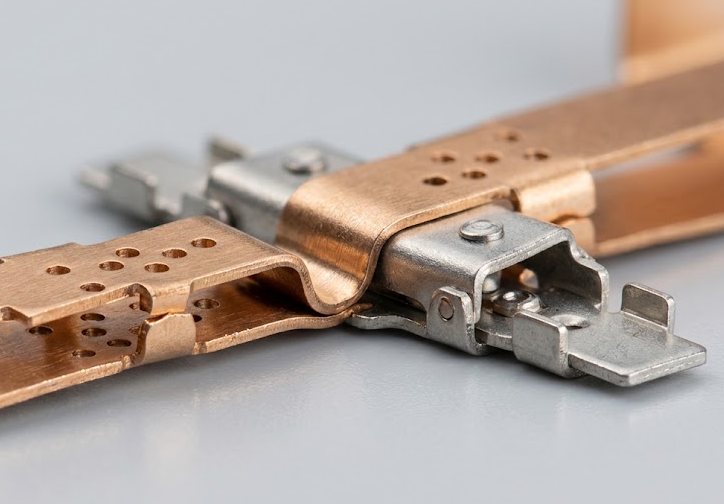
<h2 style="text-align: left;"><span style="font-size: 18pt;"><strong>Table of Contents</strong></span></h2><p style="text-align: left;"><span style="font-size: 12pt;">1. Overview</span></p><p style="text-align: left;"><span style="font-size: 12pt;">2. Core Processes of Precision Metal Stamping</span></p><p style="text-align: left;"><span style="font-size: 12pt;">3. Standard vs Precision Stamping Tolerance Data Comparison</span></p><p style="text-align: left;"><span style="font-size: 12pt;">4. Key Features of Precision Stamped Parts</span></p><p style="text-align: left;"><span style="font-size: 12pt;">5. Main Industrial Application Scenarios</span></p><p style="text-align: left;"><span style="font-size: 12pt;">6. Frequently Asked Questions</span></p><h2 style="text-align: left;"><span style="font-size: 18pt;"><strong>1. Overview</strong></span></h2><p style="text-align: left;"><span style="font-size: 12pt;">Precision metal stamping is a high-accuracy sheet metal fabrication process. It use customized stamping dies and high-speed presses to mass produce tiny metal components.</span></p><p style="text-align: left;"><span style="font-size: 12pt;">This precision sheet metal stamping technology different from conventional metal stamping. It focus on ultra-tight dimensional tolerance and smooth surface finish.</span></p><p style="text-align: left;"><span style="font-size: 12pt;">Thin metal stamping and high-precision blanking are core sub-processes. They support production of small, complex structural metal parts.</span></p><p style="text-align: left;"><span style="font-size: 12pt;">Manufacturers adopt this process for high-standard industrial components. It delivers stable batch quality and low defect rates.</span></p><h2 style="text-align: left;"><span style="font-size: 18pt;"><strong>2. Core Processes of Precision Metal Stamping</strong></span></h2><p style="text-align: left;"><span style="font-size: 12pt;">Complete precision metal stamping workflow includes multiple standardized steps. Each process control different part performance indicators.</span></p><h3 style="text-align: left;"><span style="font-size: 13.5pt;"><strong>2.1 Precision Blanking & Punching</strong></span></h3><p style="text-align: left;"><span style="font-size: 12pt;">Blanking and punching remove excess metal material. It form basic part outlines and mounting holes.</span></p><p style="text-align: left;"><span style="font-size: 12pt;">Precision dies keep cutting gap within 3% of material thickness. It reduce burrs and edge deformation effectively.</span></p><h3 style="text-align: left;"><span style="font-size: 13.5pt;"><strong>2.2 Precision Bending & Forming</strong></span></h3><p style="text-align: left;"><span style="font-size: 12pt;">Bending process shape flat metal sheets into three-dimensional structures. It control bending angle and height accurately.</span></p><p style="text-align: left;"><span style="font-size: 12pt;">Precision forming avoid material cracking and uneven deformation. It maintain consistent part geometry in mass production.</span></p><h3 style="text-align: left;"><span style="font-size: 13.5pt;"><strong>2.3 Secondary Finishing Treatment</strong></span></h3><p style="text-align: left;"><span style="font-size: 12pt;">Finishing steps include deburring, surface polishing and plating. It improve surface quality and corrosion resistance.</span></p><p style="text-align: left;"><span style="font-size: 12pt;">High-end precision stamped parts need strict surface inspection. It meet assembly and usage standards.</span></p><h2 style="text-align: left;"><span style="font-size: 18pt;"><strong>3. Standard vs Precision Stamping Tolerance Data Comparison</strong></span></h2><p style="text-align: left;"><span style="font-size: 12pt;">Tolerance level is the biggest difference between ordinary stamping and precision metal stamping. The table below show verified industrial standard data.</span></p><table style="min-width: 100px;"><colgroup><col style="min-width: 25px;"><col style="min-width: 25px;"><col style="min-width: 25px;"><col style="min-width: 25px;"></colgroup><tbody><tr><td colspan="1" rowspan="1"><p style="text-align: left;"><span style="font-size: 10pt;">Dimension Range</span></p></td><td colspan="1" rowspan="1"><p style="text-align: left;"><span style="font-size: 10pt;">Conventional Metal Stamping Tolerance</span></p></td><td colspan="1" rowspan="1"><p style="text-align: left;"><span style="font-size: 10pt;">Precision Metal Stamping Tolerance</span></p></td><td colspan="1" rowspan="1"><p style="text-align: left;"><span style="font-size: 10pt;">Surface Roughness</span></p></td></tr><tr><td colspan="1" rowspan="1"><p style="text-align: left;"><span style="font-size: 10pt;">0-10mm</span></p></td><td colspan="1" rowspan="1"><p style="text-align: left;"><span style="font-size: 10pt;">±0.10mm</span></p></td><td colspan="1" rowspan="1"><p style="text-align: left;"><span style="font-size: 10pt;">±0.02mm</span></p></td><td colspan="1" rowspan="1"><p style="text-align: left;"><span style="font-size: 10pt;">Ra ≤ 0.8μm</span></p></td></tr><tr><td colspan="1" rowspan="1"><p style="text-align: left;"><span style="font-size: 10pt;">10-50mm</span></p></td><td colspan="1" rowspan="1"><p style="text-align: left;"><span style="font-size: 10pt;">±0.15mm</span></p></td><td colspan="1" rowspan="1"><p style="text-align: left;"><span style="font-size: 10pt;">±0.05mm</span></p></td><td colspan="1" rowspan="1"><p style="text-align: left;"><span style="font-size: 10pt;">Ra ≤ 0.8μm</span></p></td></tr><tr><td colspan="1" rowspan="1"><p style="text-align: left;"><span style="font-size: 10pt;">50-100mm</span></p></td><td colspan="1" rowspan="1"><p style="text-align: left;"><span style="font-size: 10pt;">±0.20mm</span></p></td><td colspan="1" rowspan="1"><p style="text-align: left;"><span style="font-size: 10pt;">±0.08mm</span></p></td><td colspan="1" rowspan="1"><p style="text-align: left;"><span style="font-size: 10pt;">Ra ≤ 1.6μm</span></p></td></tr></tbody></table><p style="text-align: left;"><span style="font-size: 12pt;">Precision metal stamping hold 2 to 3 times tighter tolerance than ordinary stamping. It fully fit high-precision equipment assembly needs.</span></p><p style="text-align: left;"><span style="font-size: 12pt;">Its surface roughness stay below 0.8μm for small parts. No obvious scratches or burrs appear on finished surfaces.</span></p><p style="text-align: left;"><span style="font-size: 12pt;">Strict die clearance control is the core reason for high precision. Professional tooling design eliminate most dimensional errors.</span></p><h2 style="text-align: left;"><span style="font-size: 18pt;"><strong>4. Key Features of Precision Stamped Parts</strong></span></h2><p style="text-align: left;"><span style="font-size: 12pt;">Precision stamped metal components have unique advantages in industrial application.</span></p><p style="text-align: left;"><span style="font-size: 12pt;">It have excellent dimensional consistency. All parts in batch production keep uniform size. It avoid assembly mismatch problems.</span></p><p style="text-align: left;"><span style="font-size: 12pt;">It support thin and ultra-thin metal sheet processing. Materials like copper, stainless steel and aluminum can be stamped accurately.</span></p><p style="text-align: left;"><span style="font-size: 12pt;">Production efficiency is very high. High-speed stamping equipment finish thousands of parts per hour. It suit large-volume orders.</span></p><p style="text-align: left;"><span style="font-size: 12pt;">Post-processing workload is low. Qualified precision parts almost no need secondary correction.</span></p><h2 style="text-align: left;"><span style="font-size: 18pt;"><strong>5. Main Industrial Application Scenarios</strong></span></h2><p style="text-align: left;"><span style="font-size: 12pt;">Precision metal stamping serve multiple high-end manufacturing fields.</span></p><p style="text-align: left;"><span style="font-size: 12pt;">Electronic manufacturing is the largest application field. Tiny conductive contacts and metal brackets all use precision stamping process.</span></p><p style="text-align: left;"><span style="font-size: 12pt;">Medical device industry adopt precision stamped parts. 316L stainless steel components meet medical safety and precision standards.</span></p><p style="text-align: left;"><span style="font-size: 12pt;">Aerospace industry use lightweight stamped structural parts. Strict tolerance ensure flight equipment stability.</span></p><p style="text-align: left;"><span style="font-size: 12pt;">Automotive electronics also rely on this technology. Precision terminals and sensor parts improve vehicle system accuracy.</span></p><h2 style="text-align: left;"><span style="font-size: 18pt;"><strong>6. Frequently Asked Questions</strong></span></h2><p style="text-align: left;"><span style="font-size: 12pt;"><strong>Q1: What tolerance can precision metal stamping achieve?</strong></span></p><p style="text-align: left;"><span style="font-size: 12pt;">A1: For parts under 10mm, it can reach ±0.02mm tolerance. Larger parts within 100mm can keep stable ±0.08mm tolerance, far better than conventional stamping.</span></p><p style="text-align: left;"><span style="font-size: 12pt;"><strong>Q2: What materials fit precision sheet metal stamping best?</strong></span></p><p style="text-align: left;"><span style="font-size: 12pt;">A2: Copper alloy, phosphor bronze, 304/316 stainless steel and thin aluminum alloy are the most common materials. These materials have stable ductility for high-precision forming.</span></p><p style="text-align: left;"><span style="font-size: 12pt;"><strong>Q3: What is the difference between precision stamping and ordinary stamping?</strong></span></p><p style="text-align: left;"><span style="font-size: 12pt;">A3: Precision stamping use high-precision dies and strict process control. It has tighter tolerance, smoother surface and lower defect rate, targeted for high-end precision components.</span></p><p style="text-align: left;"><span style="font-size: 12pt;"><strong>Q4: Is precision metal stamping suitable for mass production?</strong></span></p><p style="text-align: left;"><span style="font-size: 12pt;">A4: Yes. It is designed for high-volume production. It maintain consistent precision and low cost in long batch production runs.</span></p><p><span style="font-size: 10.5pt;"> </span></p>
返回新闻列表 / Back to News
Precision Metal Stamping: Process, Tolerance Standard and Industrial Uses
2026年10月15日